
Pause
Why PAUSE?
PAUSE highlights the importance of taking sufficient time to explore difficult thoughts and feelings (offline mentalizing), such as an uncomfortable emotion, an intense discussion, a recurring tension in the body, or a worrying thought.
PAUSE also refers to the unique opportunity to press ‘Pause’ and to put everything at school on hold for a moment and reflect on what it is like for you as a teacher to work with certain students or class groups. Through small-group booster sessions, we aim to rewind the situation and carefully identify what you need in order to return to your work with an open mind.
PAUSE emphasises the necessary structure of this framework, ensuring that we do not ‘simply vent’ about a situation or relationship, but instead safely restore our mentalizing step by step.
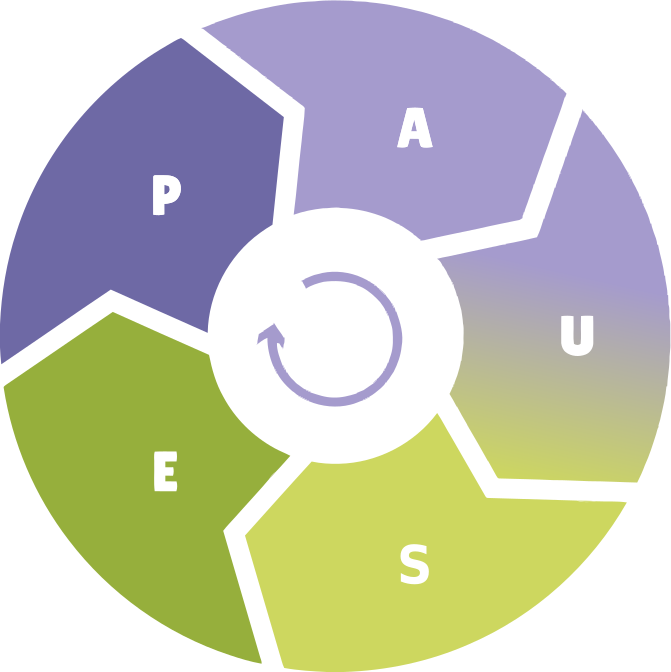
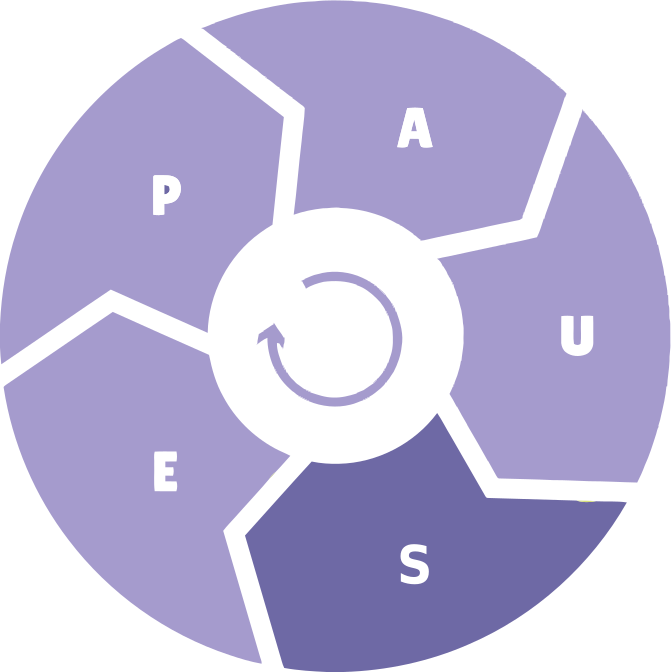
The PAUSE-framework
Below, we offer a brief overview of our framework. Its content is explored in more detail during the training and booster sessions. Interested in applying the framework at your school? Get in touch!
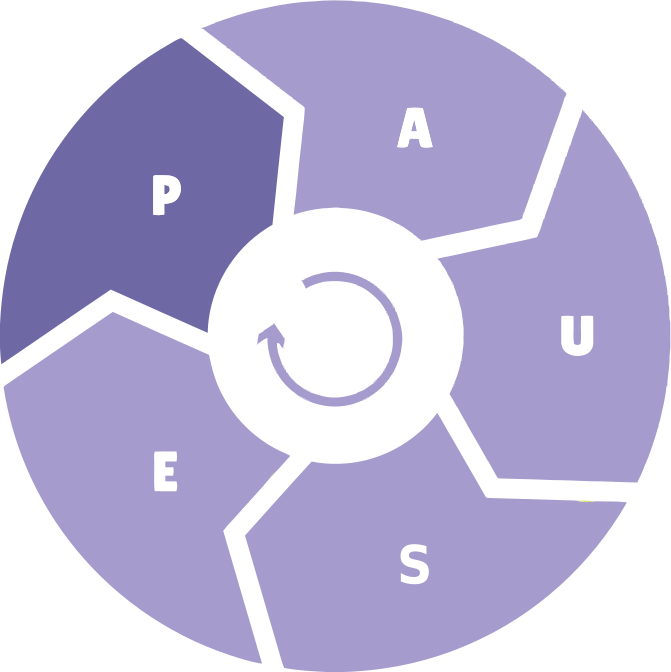
Perceive
How am I doing (green, orange, red, blue)? What are my thoughts? Which feelings are present? Notice signs of reduced or offline mentalizing. Am I tense? Do I feel nervous about something? What do I need to feel calmer? Or to feel more confident? Also, try to consider for a moment how the other person is doing. What does the other person need (from me) to become calmer?
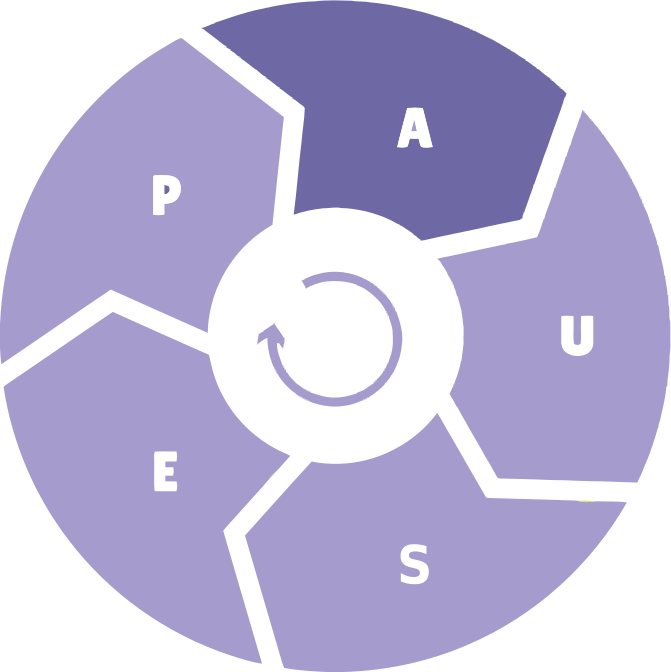
Acknowledge
Say and notice how you feel within yourself. How deeply are you affected? Have you been able to express this clearly to your colleagues?
At the same time, really listen to the other person and acknowledge their feelings, responding in a validating and empathetic way. Avoid offering solutions; instead, explore your colleague’s underlying needs. How angry or disappointed is your colleague?
Notice whether you feel sufficiently listened to and understood. Were you able to identify together what you – or the other person – need? What is missing in this interaction or in the situation?
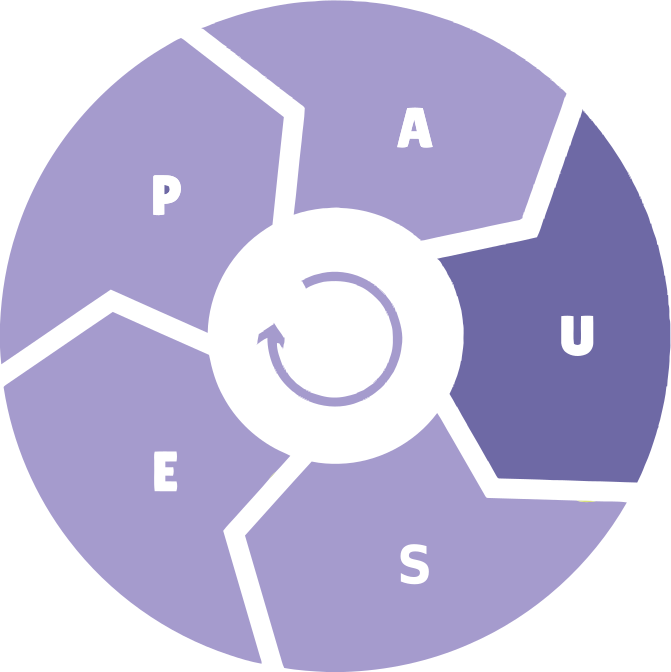
Unpack the process
Use the interaction circle for a difficult moment between you and a student. Based on your dominant feeling or thought, try to unpack the potential effects this may have. Ask ‘how’ questions and notice the different pitfalls of offline mentalizing. Together with your colleagues, explore alternative perspectives where appropriate, while continuously checking whether this feels right for you.
See perspectives
After the exercise with the interaction circle has provided you with new perspectives, it can be useful to reflect on which recurring thoughts or statements you keep returning to. Notice how you may cross your own boundaries – what role (e.g., rescuer, accuser, victim) do you tend to get stuck in? And which position would you prefer to take on ‘the pedagogical dance floor’?
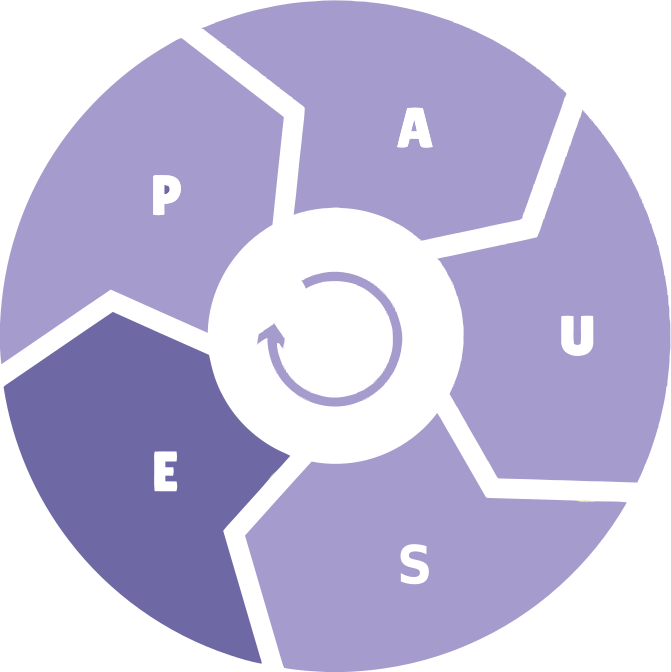
Evaluate
Reflect on the previous steps and the different perspectives that emerged. You may outline next steps for yourself. What do you take away from this deeper exploration, and what support might you still need from others?